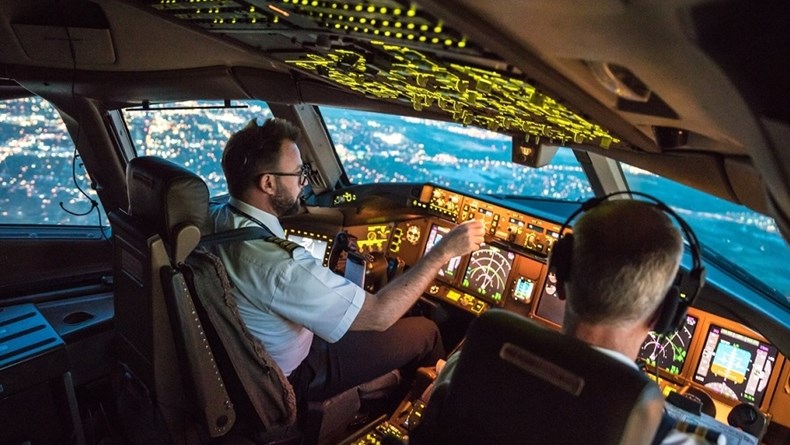
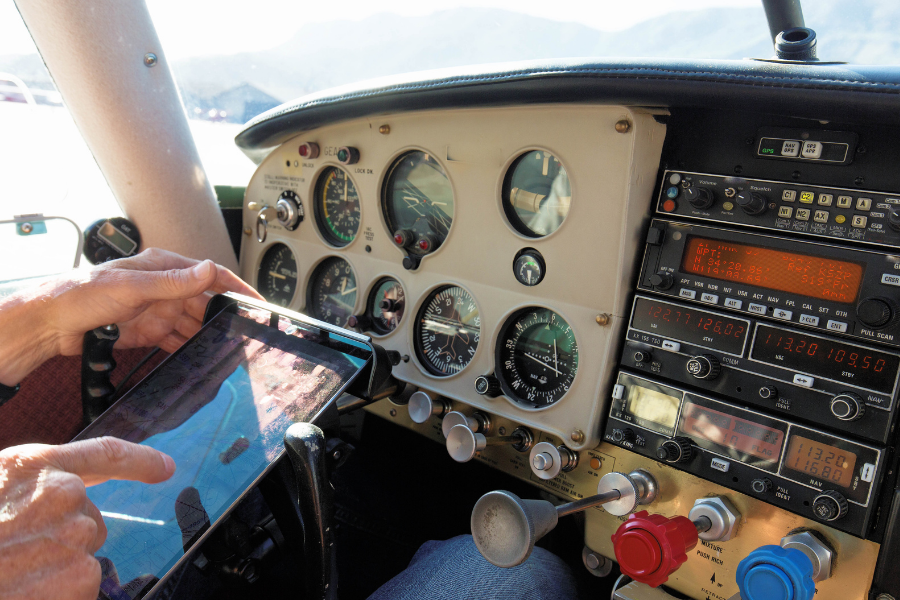
Pilot Training In India: The Time Is Now – The Indian aviation sector is now poised for significant expansion and growth over the next decade, providing unprecedented opportunities for future pilots. Massive aircraft orders placed by IndiGo, Air India, and Akasa Air; increased government-sponsored airport expansion activities; and changes to FDTL regulations will contribute to the long-term demand for pilots in India.
India’s domestic passenger air travel market is already the 3rd largest globally and is expected to continue its robust growth over the next 10 to 15 years. The large increase in income, the growth of India’s middle class, growing regional connectivity schemes, and lower-cost airfares will draw millions of first-time airline passengers into the Indian air transport system each year. Airbus estimates that the Indian commercial aircraft (aircraft with passenger seating capacities of 100+ seats) will triple to approximately 2,250 aircraft by 2035. This expansion is based on an estimated increase in passenger traffic of approximately 9% per year. Given this expansion of the commercial aircraft fleet, India will need approximately 35,000 pilots by 2035 as compared to the current number of approximately 12,000 pilots. For a student completing the 12th grade or a person with an interest in obtaining a commercial pilot licence, this represents a substantial increase in demand for pilots over the next decade. The demand for pilot training in India is significant to meet the projected demand for pilots in the Indian aviation market.
Airlines Are Making Record Aircraft Orders
Within the last few months, IndiGo, Air India, and Akasa Air have all ordered roughly 1,120 airplanes, a massive amount for a single country. The aircraft deliveries are spread out over many years, resulting in ongoing fleet additions and an ongoing need for new pilots.
IndiGo: Powering Domestic and Regional Growth
India’s largest airline, IndiGo, placed its largest single commercial aircraft order ever at the Paris Air Show in June 2023. IndiGo ordered 500 Airbus A320 series jets. With this, IndiGo’s total A320neo family order book has crossed roughly 1,300 aircraft, on top of the 400+ aircraft it already operates.An extensive stock of narrow-body aircraft means that pilots have many flying hours, numerous bases within India, and several upgrade opportunities from Junior First Officer to Captain and potentially from Captain to Instructor or Check Pilot.
Air India: A Global Network Vision
The Tata Group’s newest member, Air India, is set to acquire approximately 470 commercial airplanes via Airbus and Boeing, including A320neo series aircraft, A350s, and B737 MAX narrow-bodies and 787/777X wide bodies. This order is one of the largest ever received by one airline group and will turn Air India into a world-class international airline/airline network.For pilots, this means there are multiple options available:
Narrow-body operations on very busy domestic & regional routes
Wide-body operations on long-haul/ultra-long-haul routes to North America and Europe, Australia, and other parts of the world.
Operations involving wide-body flights usually involve some level of international operational experience/ETOPS operational experience/long-range flight planning; therefore, over the long term, provide not just employment opportunities inside of India, but also allow Indian pilots to compete globally with strong wide-body experience on their logbooks.
Akasa Air: Growth-Stage Challenger
In addition to being the most recent addition to India’s airline industry, Akasa has quickly grown from being a startup to being an established operator by ordering 150 additional B737 MAX aircraft as part of the current operational order. This brings the number of aircraft to be delivered to 226 by 2032 or full operational capability.One aircraft type makes up the entire Akasa fleet (737 MAX), which enables them to operate on domestic and short-haul international routes, making training and operations easier. For junior pilots, high-growth airlines, like Akasa, usually provide faster career advancement opportunities than previously because new deliveries of aircraft provide new opportunities for captains, trainers, and managers every year.
Airports Expansion: From 150 to 220 and Beyond
While fleet expansion is critical, it also needs airports and route capacity. The Indian government has announced that it will develop over 220 airports, heliports, and water aerodromes by around 2035. Currently, approximately 150-160 airports are operating in the country. The two factors driving this capacity expansion are:
The UDAN scheme (‘Ude Desh ka Aam Naagrik’), which provides connectivity to small towns, as well as connectivity to regional routes.
The long-term national plans envision more than 400 airports by 2047.
With an increasing number of Tier 2 and Tier 3 cities coming into existence, airline companies will start opening new routes and increasing annual flight frequency from metro locations to those cities. Each new airport, new route, and increased number of daily flights will need additional pilots; therefore, airport expansion will be a direct contributor to new pilot jobs in the cabins.
New FDTL Rules: More Crews Required for Aircraft
Currently, the demand for pilots in India is increasing as a result of a new rule by DGCA changing Flight Duty Time Limitations (FDTL) from the current standards. These new standards will help improve pilot fatigue management for better safety and are designed to be more in line with best practices around the world. Changes include:
Rest from 36 hours per week to 48 hours
The definition of Night Duties is now stricter, and the maximum duty time at night is now based on 10 hours.
Only 2 landings allowed during night operations, and now have more restrictive cumulative duty hours limitations.
The new regulations will promote the safety and well-being of pilots; however, pilots will be legally limited to fewer flight hours and sectors, which will require more pilots than before. In fact, some estimates put the pilot requirement increase at 15-20% due solely to the change in FDTL. Before FDTL, airlines needed approximately 12 pilots per narrow body; now they may need 14-15 pilots per narrow body to comply with regulations and continue to operate reliably and resiliently in our industry. As a result, Indigo, Air India, Spicejet, and Akasa have all been aggressively hiring pilots due in part to the increased pilot requirements driven by the FDTL. When you combine:
The national fleet size has just tripled
Airline growth from 150 to 220, and eventually 400+ airports
FDTL-driven uplift in pilots per aircraft
It will create a rigidly constrained supply of pilots in the market, combined with a great long-term demand.
What Does this Mean for Aspiring Indian Pilots?
If you have graduated from school or aspire to be a CPL, then the time has never been better to start your training over the next few years, as by the time you can begin line flying experience, the number of aircraft, routes, and international networks will be increasing dramatically.Below is an overview of the opportunities that will exist during a pilot’s career journey:
Student Pilots (CPL Level) – With so many aircraft on order, airlines are planning out 10 to 15 years, which greatly reduces the risk of training into a stagnant market for pilots.
Junior First Officers – Both of the narrow-body fleets at IndiGo and Akasa are at a high frequency for their service schedules and will allow for rapid building of flying hours, exposure to a variety of route opportunities, and fairly predictable command upgrades as the fleets continue to grow.
Experienced Captains – Air India’s wide-body growth is providing exceptional opportunities (training, check, and management) as they add new A350, 787, and 777Xs aircraft to their fleet for long-haul command opportunities.
Later career paths – As the industry matures, instructors, examiners, safety officers, fleet managers, and operations managers will be in demand, giving pilots a path into leadership and training roles without leaving the aviation industry altogether.
For families thinking about pilot training as an investment, the most important message from this report is that the demand for pilots is being created by deeper causes, such as how many new planes are on order, how many airports are getting expansions, how many new regulations are being created, etc., vs. just a temporary spike in demand after the pandemic has passed. Because of this demand structure, students now have a far better chance of long careers as airline pilots, compared to previous generations.
Why Narain Aviation in Bengaluru is the Best Choice for Pilot Training
Current conditions in the Pilot Training Industry provide tremendous choices to student pilots. The quality of the institute you choose will be one of the most important factors in determining your success in getting a Commercial Pilot Licence and beginning your successful career with an airline.Narain Aviation provides the following:
Comprehensive Pilot Training, from a student who has completed 12th Grade, through the completion of your CPL, and being ready to accept employment with an airline.
Pilot Training programs specifically designed based on current DGCA Standards and Airline expectations, including Ground School, Simulator Training, and Practical Flight Training.
Guidance and Mentorship by Professional Pilot Instructors who provide a mix of Professional Pilots with flying experience and Professional Pilots with previous airline hiring experience, both of which will help you understand both the technical requirements of flying and the professional career of flying as an employee of an airline.
Flying Schools that provide quality and value for money.
As Narain Aviation keeps a close watch on various airline recruitment trends and regulatory changes, their students are not only prepared to pass exams but are even equipped to meet the actual standards of IndiGo, Air India, Akasa Air, and many other leading airlines.Remember, YOU FLY LIKE YOU TRAIN.
Fill the Details Below & Get a Free Guide on How to Become a Pilot.
He had served in the Meteorological Branch of the Indian Air Force for over 25 years. He not only has had years of experience in operational weather forecasting across the country but had also served in the capacity of Joint Director involving administrative and policy matters.
He was part of IPKF in Sri Lanka and served during various operations. He was actively involved in issuing timely forecasts for cyclones over Kutch and during earthquake at Bhuj.
He has deep knowledge of Meteorology and forecasting based on years of experience having served in most parts of the country. This practical knowledge mixed with years of teaching experience is very helpful in his current assignment.
Besides all of the above, he has had the opportunity of teaching Met for over five years to young trainee pilots at flying academies in Bidar and Hakimpet. At these places, young trainees from Fighter and Helicopter stream were trained to become pilots’ in the Indian Air Force.
A Squadron Commander in the IAF, she has handled the responsibilities of a Senior Air Traffic Controller, Radar Controller and a Duty Air Traffic Controller. She was the operational and administration head for more than 70 personnel in a squadron, which included officers and airmen.
Implementation of Airport procedures and enforcing field rules and regulations at diverse IAF bases with varied traffic conditions.
Successfully handled Aircraft operations as Senior Air Traffic controller at busy Air Force bases like Tezpur, Jodhpur, Bidar and Hakimpet which have complex flying environments, handling mixed traffic of defence as well as civil airplanes.
Successfully delivered results while working under challenging conditions and resource constraints. Possesses the ability to integrate and motivate diverse teams by creating positive work environment to facilitate high grade performance.
A retired fighter pilot, with versatile experience of 30 yrs. in the IAF, comprising Flying Training primarily, Operations and Flight Safety, apart from Surface to Air Missiles and Radars.
Over 17 yrs as a pilot, including second-in-command of a Flying Squadron. Total Flying of 2,350 hrs (4000 sorties), on Maruts, MiG-21s, Kirans, HT-2s and HPT-32s. Have force-landed aircraft without engine power twice, as a trainee (jet trainer aircraft) and as an Instructor (propeller trainer aircraft).
Qualified/Chief Flying Instructor twice at the Air Force Academy, 900 hrs instructional flying with trainees. Chief Ground Instructor at AF Stn Bidar, handling all Ground Training for flying
Commander of a Missile Squadron of 375 technical, operational and support personnel, for 3 yrs. Best Guided Weapons Squadron twice, 1997-98 and 1999-2000.
Director/Senior Flying Training Officer at HQ Training Command IAF, Bangalore for 5 yrs. Responsible for induction and operations of Hawk Advanced Jet Trainers and Flight Simulators at Bidar, Flying Instructors’ School at Tambaram and Surya Kiran Aerobatic Team (SKAT).
Qualified Flying Instructor, trained at Flying Instructors’ School, Tambaram, Chennai(1990) Second in Flying and fifth in overall merit at commissioning.
Air Marshal Ravinath Gururaj Burli (Retd) has a distinguished record of four decades of service. He has been an instructor at Flying Instructors School (FIS), Tactics And Combat Development Establishment (TACDE), Defence Services Staff College (DSSC).
He was Commandant at Air Force Academy (AFA), Dundigal, where he trained the young air force cadets learn flying training.
He brings his immense knowledge to train young students at our institute in Navigation, Instruments and Radio aids. His passion for teaching is amazing and fabulous.