RTR Training
The Radio Telephony Restricted (Aeronautical) or RTR (A) license is a mandatory legal requirement for all commercial pilots in India to operate aircraft radio equipment. As of late 2025, the examination administration has transitioned from the Wireless Planning & Coordination (WPC) wing to the DGCA to streamline the process for pilots.
The New RTR Exam Structure (2026)
Part A: Written Examination (MCQ)
- Format: Computer-based Multiple Choice Questions (MCQs) via the DGCA Pariksha Portal.
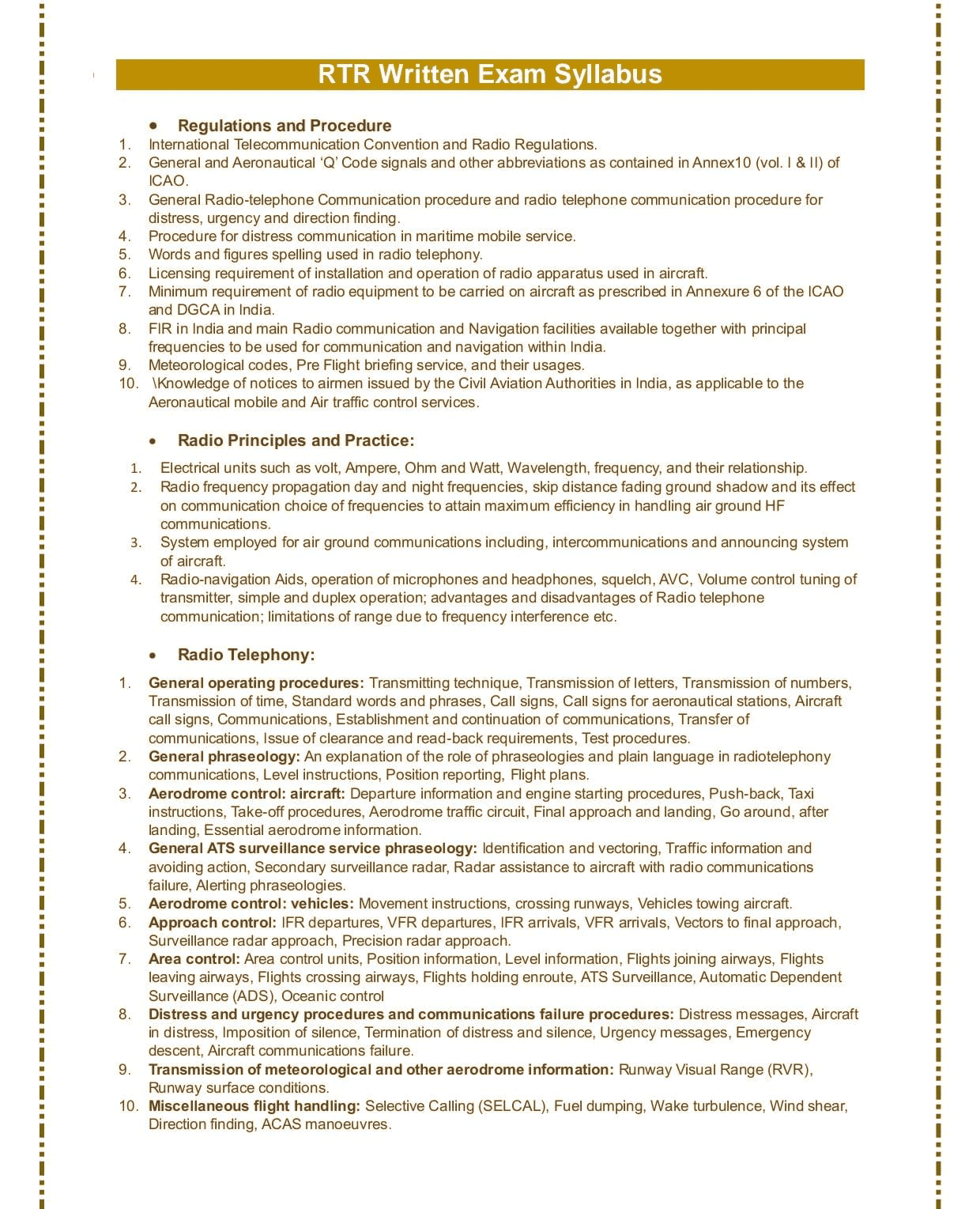
- Content: Tests radio regulations, technical radio principles, and standardized phraseology.
- Passing Criteria: Minimum 70% score required.
Part B: Practical Assessment (Simulated RT)
- Format: A 30-minute simulation session on a dedicated R/T circuit.
- Process: Candidates must handle six real-world flight scenarios (e.g., pre-flight clearances, en-route weather diversions, and emergency MAYDAY/PAN-PAN calls).
- Evaluation: Focuses on your ability to send/receive messages accurately using mandatory DGCA phraseology. No notes or books are permitted.

Key Regulatory Changes
Mandatory Computer Number: You must have a valid DGCA Computer Number to register for the exam.
Digital Licensing: Successful candidates now apply for their RTR license directly through the eGCA portal, eliminating the previous manual WPC application confusion.
Validity: The license is now valid until age 80, significantly longer than the previous 10-year or 20-year renewal cycles.
Attempt Limits: Once you pass the written exam (Part A), it remains valid for 3 years, during which you have a maximum of 3 attempts to clear the practical assessment (Part B).
RTR Training & Preparation at Narain Aviation
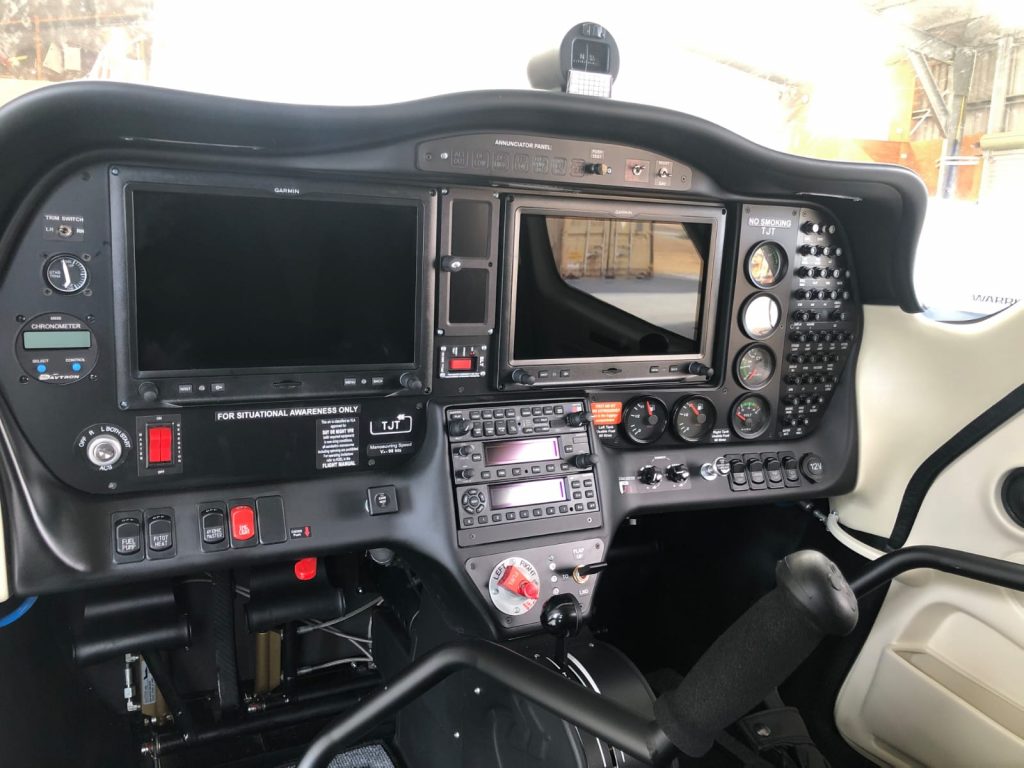
Narain Aviation provides RTR Training which focuses on both Part A and Part B. The students are given an intense revision of theory classes for Part A exam. Part B practice for standardized ICAO phraseology and technical radio principles is carried out in the special simulator installed in the institute. Several likely scenarios are practised in the simulator for the students in the simulator.
- Key Training Areas:
- ICAO Phraseology:
Learning standard calls for departure clearance, taxi, takeoff, en-route, and emergencies (e.g., “Mayday” and “Pan-Pan”). - Radio Principles:
Understanding electrical units (Volt, Ampere, Ohm), wave propagation (fading, skip distance), and communication systems like HF, VHF, and SELCAL. - Navigation Aids:
Basic knowledge of VOR, NDB, DME, and ILS systems.
- ICAO Phraseology:
The complete syllabus as per DGCA is printed below.