Launch Your Aviation Career: CPL Requirements in the Philippines
Professional Pilot Training Standards (CAAP-Approved)
The Commercial Pilot License (CPL) is the professional gateway for pilots in the Philippines. Regulated by the Civil Aviation Authority of the Philippines (CAAP) under PCAR Part 2, this license authorizes you to act as Pilot-in-Command of commercial aircraft and receive compensation for your flight services.
Basic Eligibility Criteria
To be eligible for a CPL in the Philippines, applicants must meet these baseline standards:
• Minimum Age: At least 18 years of age.
• Education: Completion of secondary school education (10+2 / K-12) or equivalent.
• Medical Fitness: Must hold a valid CAAP Class 1 Medical Certificate.
• Language Proficiency: Must be able to read, speak, write, and understand the English language (Minimum ICAO ELP Level 4).

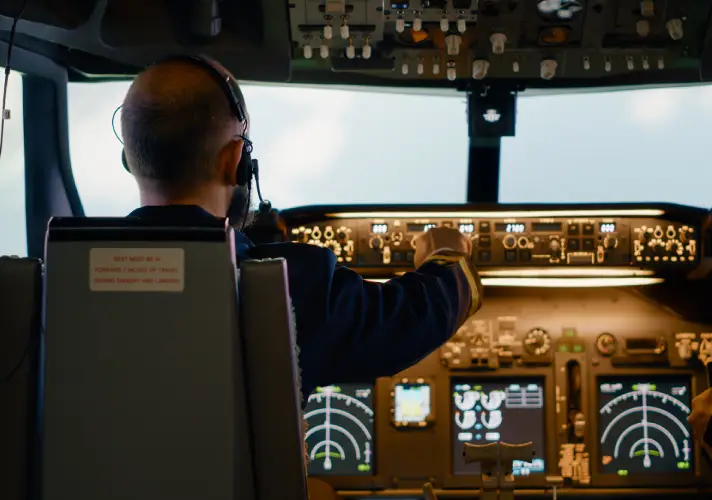
Aeronautical Knowledge (Ground School)
Applicants must complete an approved CPL Ground School course covering. The partner school covers 360 h of Ground classes.
• Air Law and Flight Rules
• Aircraft General Knowledge (Airframe, Systems, Powerplant)
• Flight Performance, Planning, and Navigation
• Human Performance and Limitations
• Meteorology and Operational Procedures
• Principles of Flight
Flight Experience Requirements (ATO Standard)
When training under an Approved Training Organization (ATO), students follow an accelerated 150-hour track:
• Total Flight Time: Minimum 150 hours (Reduced from the 200-hour modular requirement).
• Pilot-in-Command (PIC): Minimum 70 hours.
• Cross-Country: 20 hours of cross-country flight time as PIC, including one “long-distance” flight of at least 300 nautical miles (540 km) with full-stop landings at two different aerodromes.
• Instrument Time: 10 hours of instrument instruction (of which no more than 5 hours may be in a flight simulator).


Mandatory Documentation
To process the license with CAAP, the following documents are essential:
• NTC Radio Telephony License (Issued by the National Telecommunications Commission).
• NBI Clearance (or Police/Passport clearance for international students).
• Special Study Permit (SSP) (Required for foreign nationals).
• Certified Logbook properly endorsed by a CAAP-licensed Flight Instructor.
Why Train in the Philippines?
• Global Recognition: CAAP licenses follow ICAO standards and are recognized worldwide.
• Cost-Effective: Professional-grade training at competitive rates compared to Western countries.
• English Proficiency: The Philippines is a premier hub for mastering ICAO English standards
Narain Aviation has tied up with a premier training institute in Phillippines for training Indian students as per the DGCA requirements. All your documentation and requirements for the CAAP licence will be handled by our team in coordination with the FTO in Phillippines. This program will allow our students to complete their training as per CAAP and DGCA standards. Complete flying requirement as per DGCa requirements in terms of actual flying, simulator flying, X country requirements, IFR training, Night Flying etc. will be completed in Phillippines. Students can easily convert their licence upon arrival in India. This program is cost effective and value for money for our students.
Contact us for further details.