You want to become a commercial pilot? Every Commercial Pilot License (CPL) aspirant must clear the DGCA (Directorate General of Civil Aviation) theoretical exam before they start their professional aviation career in India. Every aspirant must understand the importance of the DGCA subjects before starting their preparation for the DGCA exam. This guide covers all major DGCA subjects, their importance, and tips to clear DGCA exams.
DGCA subjects are theoretical papers that are conducted by the Directorate General of Civil Aviation for those students purchasing a Commercial Pilot Licence in India. DGCA subjects are included in the CPL to evaluate students understanding of aviation laws, aircraft operations, weather conditions, navigation systems, and technical aircraft knowledge.The major DGCA subjects are:
Air regulation
Air navigation
Aviation methodology
Technical specific
Technical general
Radio Telephony Restricted (RTR)
All these DGCA subjects are mandatory for CPL aspirants to become a professional in aviation.
1. Air regulation syllabus guide
Air regulation DBCA subject includes aviation rules, standards, and operational procedures. It guides how aviation operations operate within legal frameworks. This subject helps students to understand airspace classification, aviation safety standards, and operational limits.Its key topics are:
DGCA and ICAO rules and regulations
Aviation security standards
Requirements of aircraft operations
Air traffic control methods
Pilot responsibilities and duties
Requirements of a pilot License
2. Air navigation syllabus guide
Air navigation is one of the most challenging subjects in the DGCA exam syllabus. It includes calculations, charts, maps, and flight planning concepts. You can understand air navigation concepts if you learn conceptually instead of memorizing.Its key topics are:
Time calculations like UTC, IST, and LMT
Longitude, latitude, and Earth shape
Aviation charts reading
Flight planning and monitoring
Radio navigation principles
About distance and speed calculation methods
Compass deviation, variation, and magnetic reading
3. Aviation methodology syllabus guide
Aviation methodology explains everything about weather conditions, which affect the flight safety. It includes both practical and theoretical concepts, so students can understand how weather affects aircraft performance, visibility level, and flight planning.Its key topics are:
Atmosphere structure and composition
Cloud types, formation, and classification
Weather reports and upper air reports.
Relationship between pressure, density, and temperature
Fog formation and its types
Formation, development, and avoidance of thunderstorms
Wind system and jet streams
4. Technical general syllabus guide
This subject focuses on aircraft systems, aerodynamics, necessary engines, and flight principles. Every pilot must understand technical general concepts to perform operations effectively and handle aircraft safely.Its key topics are:
Hydraulic and landing gear systems
Fuel systems
Turbine and piston engines
Structures of Aircraft
Flight controls method
Lift and drag mechanisms
Aerodynamics
Aircraft performance measurement methods
5. Technical-specific syllabus guide
Technical specifics depend on the type of aircraft students are trained during the flying training. So, the syllabus also depends on the type of aircraft.Its key topics are:
Aircraft systems and their operations
Aircraft operational limitations
Emergency procedures as per POH
Aircraft performance charts
Operating manuals for aircraft operations
6. Radio Telephony Restricted Guide
The RTR exam is conducted by the DGCA to evaluate the radio communication skills of pilots. RTA certification is necessary to become a pilot in India.It checks:
Radio communication skills of students
Aviation phraseology Standards
Emergency communication procedures
Ability to handle real-time ATC situations
Overview of DGCA Exam Patterns and Passing Marks
DGCA conducts online objective examinations through the Pariksha DGCA portal throughout the year. Must verify the updated guidelines and syllabus of DGCA before appearing in the examinations.Some features of DGCA exams:
They provide multiple-choice questions.
Provide limited time to complete the exam.
Conduct online computer-based examinations.
Passing marks for DGCA exams are around 70% of total marks.
Negative marking is not applicable.
Exam result is displayed on the screen immediately after submission.
What Are the Best Strategies for Studying DGCA Subjects?
Consistency and an effective study plan improve performance and increase your chances of clearing the DGCA exam.These are some tips that help you to study effectively.
Make a structured study plan by dividing DGCA subjects into daily small targets.
Understand aviation concepts conceptually, not by memorizing answers.
Practice by conducting mock tests to improve time management, accuracy, exam temperament, and confidence.
Make short notes and formula sheets- revise them regularly.
Join professional ground classes to understand difficult concepts and stay updated with DGCA exam patterns.
Conclusion
DGCA subjects are the foundation of every professional pilot’s aviation career. DGCA subjects like Air Regulations, Navigation, Meteorology, and Technical General help students to develop technical understanding, which is essential for safe and efficient flight operations. Students can only succeed in DGCA exams if they prepare consistently and conceptually, and get proper guidance. If you are looking for professional and expert guidance, contact Narain Aviation.
FAQs Regarding DGCA:
Q1. What are the major DGCA subjects for CPL?
Ans: The major DGCA subjects for CPL are air regulations, air navigation, aviation meteorology, technical general, technical specific, and RTR (Radio Telephony Restricted).
Q2. How long does a student take to clear the DGCA exam?
Ans: Students clear major DGCA papers within 6 to 12 months in India. But it mainly depends on the preparation level of students.
Q3. How many marks are required to pass the DGCA exam in India?
Ans: Most DGCA papers require around 70% marks to pass in India. Verify the latest DGCA guidance before appearing in the exam.
Q4. Can I prepare for the DGCA exam after completing 12th?
Ans: Yes, you can prepare for the DGCA exam after the completing of 12th class with science and mathematics.
Q5. Which subject is considered the toughest DGCA subject?
Ans: Air navigation is considered as the toughest DGCA subject due to calculations, charts, and flight planning concepts.
Fill the Details Below & Get a Free Guide on How to Become a Pilot.
He had served in the Meteorological Branch of the Indian Air Force for over 25 years. He not only has had years of experience in operational weather forecasting across the country but had also served in the capacity of Joint Director involving administrative and policy matters.
He was part of IPKF in Sri Lanka and served during various operations. He was actively involved in issuing timely forecasts for cyclones over Kutch and during earthquake at Bhuj.
He has deep knowledge of Meteorology and forecasting based on years of experience having served in most parts of the country. This practical knowledge mixed with years of teaching experience is very helpful in his current assignment.
Besides all of the above, he has had the opportunity of teaching Met for over five years to young trainee pilots at flying academies in Bidar and Hakimpet. At these places, young trainees from Fighter and Helicopter stream were trained to become pilots’ in the Indian Air Force.
A Squadron Commander in the IAF, she has handled the responsibilities of a Senior Air Traffic Controller, Radar Controller and a Duty Air Traffic Controller. She was the operational and administration head for more than 70 personnel in a squadron, which included officers and airmen.
Implementation of Airport procedures and enforcing field rules and regulations at diverse IAF bases with varied traffic conditions.
Successfully handled Aircraft operations as Senior Air Traffic controller at busy Air Force bases like Tezpur, Jodhpur, Bidar and Hakimpet which have complex flying environments, handling mixed traffic of defence as well as civil airplanes.
Successfully delivered results while working under challenging conditions and resource constraints. Possesses the ability to integrate and motivate diverse teams by creating positive work environment to facilitate high grade performance.
A retired fighter pilot, with versatile experience of 30 yrs. in the IAF, comprising Flying Training primarily, Operations and Flight Safety, apart from Surface to Air Missiles and Radars.
Over 17 yrs as a pilot, including second-in-command of a Flying Squadron. Total Flying of 2,350 hrs (4000 sorties), on Maruts, MiG-21s, Kirans, HT-2s and HPT-32s. Have force-landed aircraft without engine power twice, as a trainee (jet trainer aircraft) and as an Instructor (propeller trainer aircraft).
Qualified/Chief Flying Instructor twice at the Air Force Academy, 900 hrs instructional flying with trainees. Chief Ground Instructor at AF Stn Bidar, handling all Ground Training for flying
Commander of a Missile Squadron of 375 technical, operational and support personnel, for 3 yrs. Best Guided Weapons Squadron twice, 1997-98 and 1999-2000.
Director/Senior Flying Training Officer at HQ Training Command IAF, Bangalore for 5 yrs. Responsible for induction and operations of Hawk Advanced Jet Trainers and Flight Simulators at Bidar, Flying Instructors’ School at Tambaram and Surya Kiran Aerobatic Team (SKAT).
Qualified Flying Instructor, trained at Flying Instructors’ School, Tambaram, Chennai(1990) Second in Flying and fifth in overall merit at commissioning.
Air Marshal Ravinath Gururaj Burli (Retd) has a distinguished record of four decades of service. He has been an instructor at Flying Instructors School (FIS), Tactics And Combat Development Establishment (TACDE), Defence Services Staff College (DSSC).
He was Commandant at Air Force Academy (AFA), Dundigal, where he trained the young air force cadets learn flying training.
He brings his immense knowledge to train young students at our institute in Navigation, Instruments and Radio aids. His passion for teaching is amazing and fabulous.
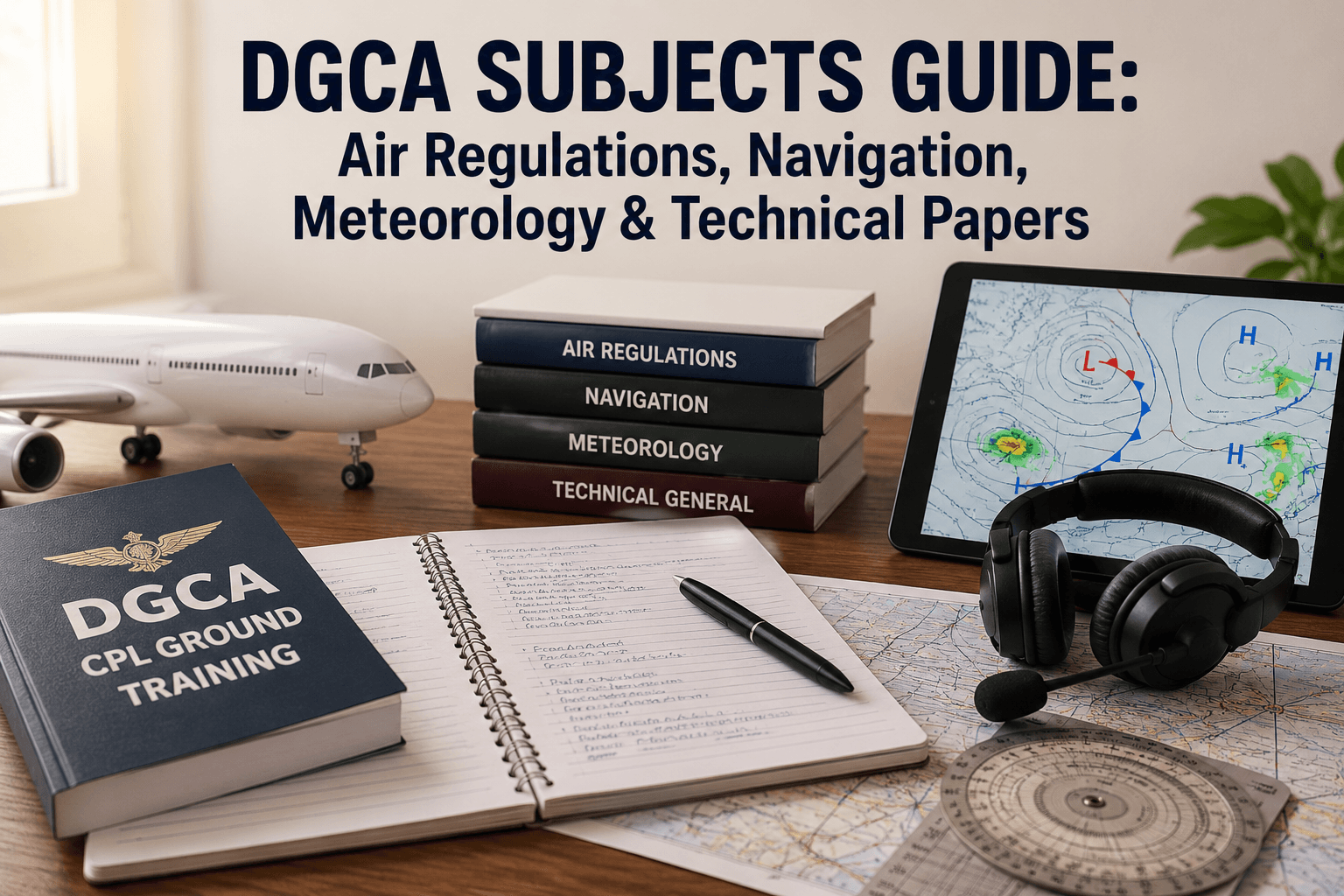
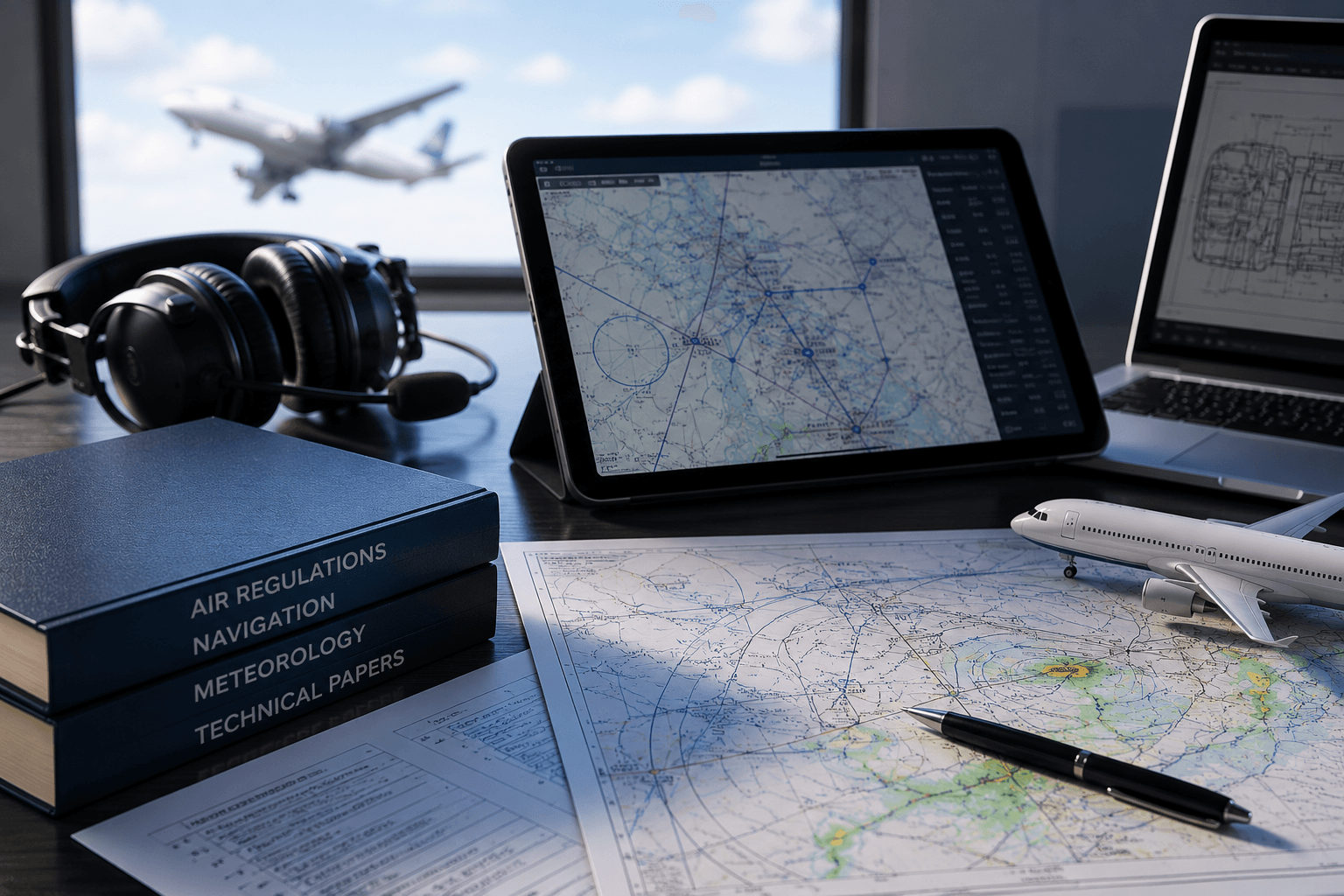 DGCA subjects are theoretical papers that are conducted by the Directorate General of Civil Aviation for those students purchasing a Commercial Pilot Licence in India. DGCA subjects are included in the CPL to evaluate students understanding of aviation laws, aircraft operations, weather conditions, navigation systems, and technical aircraft knowledge.The major DGCA subjects are: